

The project may be delivered, but the business work often continues long after the final file is sent.
Find the right client detail. Reconstruct the agreement. Create the invoice. Follow up politely. Keep the receipt. Check the bank. Try to understand next month. None of these tasks are the work clients hired you to do, yet together they decide how sustainable a small business can feel.
01 / The hidden job
Great work should not create a second shift
Small-business owners and SME teams rarely lack ambition. What drains momentum is the invisible operational work that follows a completed job. When information lives across messages, documents, spreadsheets, folders, and memory, even a straightforward invoice can become a chain of small decisions.
The cost is not only time. Fragmented administration makes it harder to see which clients need attention, what has been earned, what has been spent, and whether the next month feels secure. That uncertainty turns a good week of delivery into an anxious week of follow-up.
A growing business should mean more room to build meaningful work—not more tabs, reminders, and uncertainty.
02 / The principle
Build one rhythm from work to cash clarity
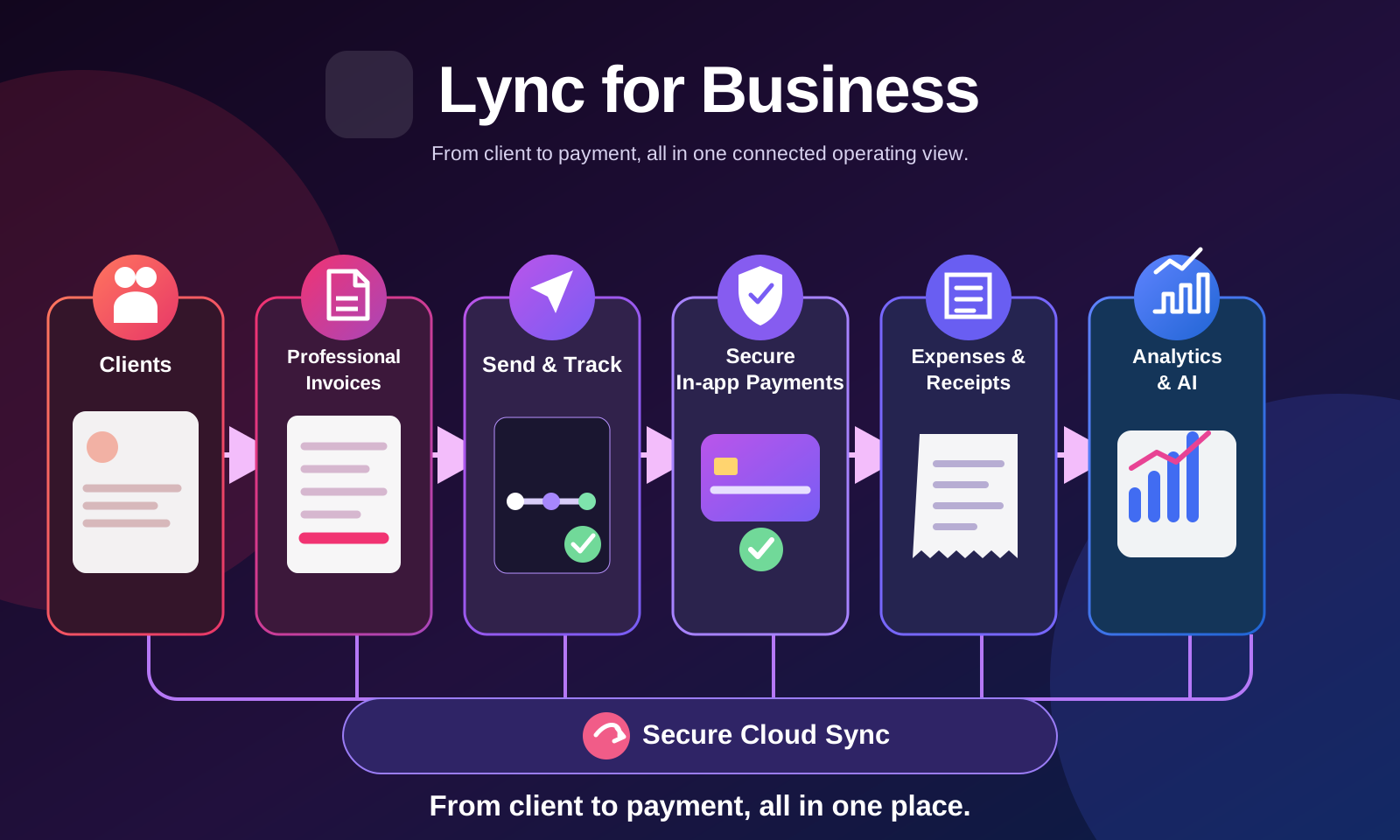
Lync is designed around a connected rhythm rather than a collection of isolated tasks. The point is not to automate every decision. It is to keep the information needed for a good decision close to the work that created it.
Client and service context
  ↓
Lync: invoice → secure payment request
  ↓                    ↓
Receipts and expenses   Client checkout
  ↓                    ↓
Cash-flow visibility ← verified provider callback
  ↓
A calmer next decision
When that rhythm is visible, an invoice is no longer just a PDF sent at the end of a project. It becomes part of a clearer operating picture: the relationship, the work, the money, and the next step.
03 / The system
What Lync brings together
Bring client details, invoice history, and the context behind each piece of work into a place that is easy to revisit when it is time to invoice, follow up, or plan the next engagement.
Create branded invoices, record terms and dates, and keep a clear record of what a client is being asked to pay.
From the invoice record, Lync creates a secure payment request and preserves the reference, status, and payment history in the same operating view.
Capture receipts with AI assistance, track expenses, and bring expected and confirmed income into a cash-flow view that supports better decisions.
A useful business system reduces cognitive load. It should give an owner context at the right moment, not demand that they remember where every piece of context lives.
04 / Secondary payment route
Give clients another familiar way to pay
The primary payment path lives in the Lync app, where the invoice, secure payment request, status, and confirmation stay together. WhatsApp Business extends that path for clients who prefer to receive an approved invoice and payment link in the conversation channel they already use. For teams that use HubSpot, contact and deal context can stay connected through the hand-off, while Lync keeps responsibility for the invoice and its payment state.
Offer the right payment path
Lync creates the payment request through its Paystack checkout flow. Clients can choose from the card and supported bank-based payment options available to that business account, country, currency, and provider configuration. WhatsApp carries the invitation and the secure link; the payment provider handles the checkout.
Close the loop with a verified callback
After the client completes checkout, Paystack calls Lync’s protected webhook. Lync verifies the provider signature, matches the payment reference, confirms the expected amount and currency, then marks the corresponding invoice records as paid and updates the owner’s cash view. A browser return, WhatsApp reply, screenshot, or “paid” message cannot perform that transition. The callback is what turns a convenient client experience into dependable financial state.
The result is a more natural hand-off for the client and a more reliable operating record for the business: clear context in, a clear request out, verified cash status back.
05 / The outcome
Automation should make business feel more human
The best automation does not make people disappear. It removes the repetitive friction that prevents them from being present for the conversations, craft, and decisions that matter. It gives a client a clear next step and gives the business owner a dependable picture of what is happening.
That is the ambition behind Lync: invoice smart, get paid fast, and spend more energy on the work you want to be known for.
06 / Explore Lync
Build a calmer business rhythm
Explore Lync to see how client management, invoicing, expenses, payment requests, and cash-flow visibility can work together in one place.
Stay up to date
Get new engineering notes by email.
Occasional, practical writing on engineering, automation, data, and product strategy.